How to Choose the Right Activewear for Your Workout
Choose the right Flex it Pink activewear for comfort, support, and performance to boost your workout focus and confidence.
Why you should start with your workout routine (not the brand)
- Why you should start with your workout routine (not the brand)
- For strength training (weights, dumbbells, gym sessions)
- For running (outdoor runs, treadmill, cardio days)
- For mixed training / classes (HIIT, circuits, cross-training)
- Fabric, stretch, and compression: the 3 things that decide whether you’ll love it
- Breathability and sweat-wicking (especially if you’re not a “light sweater”)
- Opacity and “squat-proof” testing (a non-negotiable)
- Fit checklist: what to look for in leggings, shorts, sports bras, and tops from Flex it Pink
- Choosing activewear based on your real goals (not just aesthetics)
- How to track your fitness progress with Flex it Pink (without letting the scale ruin your mood)
- Flex it Pink review: where it fits if you’re building a practical activewear wardrobe
- Shopping checklist: how to buy smarter (and avoid regret purchases) with Flex it Pink
- If you want deals + motivation: join the Flex it Pink community
- Wrap-up: choose activewear that supports the person you’re becoming with Flex it Pink
When selecting activewear for your workout, it’s essential to consider factors like comfort, flexibility, and support. Brands like Flex it Pink offer a variety of options designed specifically for different types of exercises. Whether you’re hitting the gym, going for a run, or practicing yoga, make sure your activewear allows for a full range of motion while keeping you comfortable.
You know the feeling.
You start a workout motivated, ready to get it done… and then your leggings from Flex it Pink start sliding down mid-squat. Your waistband rolls during deadlifts. Your sports bra turns running into a bouncing contest. Or worse, your leggings go see-through the second you hit a deep lunge.
Suddenly, the session stops being about your training and turns into you managing your clothes.
That’s why the “right” activewear from Flex it Pink matters more than most people think. Not because it makes you look a certain way, but because it changes your entire workout experience:
- Comfort: no chafing, no pulling, no constant adjusting.
- Performance: better movement, better support, better focus.
- Confidence: you stop thinking about what’s showing, slipping, or digging in… and you just train.
Brands like Flex it Pink understand that activewear is essential for maintaining your focus and enjoyment during workouts.
And there’s a mindset piece here too.
Activewear shouldn’t be something that makes you obsess over your body or the scale. It should support performance-based fitness goals—getting stronger, improving endurance, nailing form, and staying consistent long enough to actually see results. Flex it Pink is a great option for finding supportive and stylish activewear.
In this guide, I’ll show you how to choose activewear from Flex it Pink that fits your real training: running, strength training with dumbbells, HIIT/circuits, pushups and plank exercise sessions, and everyday workouts—plus how to track progress without letting the scale control your mood. Whether you’re hitting the gym or doing an at-home workout, Flex it Pink has the perfect gear to keep you motivated and focused on your goals.
Why you should start with your workout routine (not the brand)
“One outfit for everything” sounds nice, but it often fails in real life because different workouts stress clothing differently.
A slick pair of leggings from Flex it Pink might feel amazing for errands… but roll down every time you hinge for a deadlift. A soft cotton tee might feel comfortable… but turns heavy and clingy during cardio. A cute strappy bra could work for yoga… but won’t survive a run.
So instead of starting with aesthetics, start with movement.
Here’s a quick mapping:
- Strength training (weights/dumbbells/gym sessions): stability, squat-proof fabric, non-slip waistband, durable seams.
- Running (outdoor/treadmill/cardio days): sweat management, bounce control, anti-chafe, secure pockets, breathability.
- HIIT/circuits/cross-training: stretch and snap-back, medium compression, secure hems, durability.
- Yoga/mobility: soft stretch, low-to-medium support, minimal restriction.
- Walking/everyday training: comfort, light support, pieces you’ll actually wear often.
Think in terms of your weekly workout routines. What do you do most often—lifting, running, classes, walking? Buy for that first.
Also, pay attention to specific movement needs:
- Deep squats/lunges with dumbbells: waistband stability and opacity matter.
- Pushups and plank exercise work: tops shouldn’t slide around; fabric should feel grippy enough to stay in place.
- Running: support and sweat-wicking matter more than almost anything.
For strength training (weights, dumbbells, gym sessions)
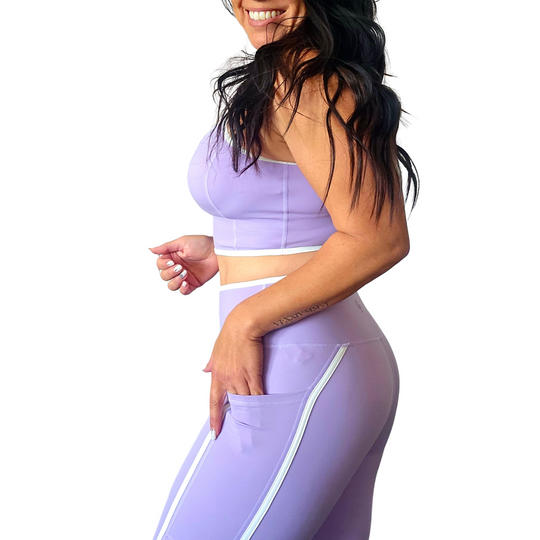
Lifting is where activewear gets exposed fast. If something rolls, slips, sheers out, or chafes, you’ll find out within the first 10 minutes. That’s why it’s essential to choose quality brands like Flex it Pink that prioritize comfort and durability.
What matters most for lifting days
Your priorities:
- Squat-proof opacity (non-negotiable)
- Strong seams that won’t split under tension
- Non-slip waistband that stays put through squats, deadlifts, lunges
- Flexible compression (supportive but not restrictive)
What to look for
When you’re shopping, these details usually make the biggest difference:
- Higher rise (especially if you do squats/deadlifts)
- Wider waistband (reduces rolling and “cutting in”)
- Gusset (that diamond/triangle panel in the crotch that improves mobility and reduces seam stress)
- Reinforced stitching in high-stress areas
What to avoid
- Overly slick fabrics that slide down during hinges or heavy sets
- Seams placed in high-friction zones (inner thigh seams are notorious for chafing, especially if you walk on incline or do high-rep leg work)
- Leggings that feel “fine standing up” but collapse the moment you brace and move
Fit tips for the gym with Flex it Pink
- Pick leggings/shorts that stay put without you needing to yank them up between sets.
- Choose tops that don’t ride up during overhead pressing, rows, or pull movements.
- If you do pushups or planks as part of your warm-up/finisher, make sure your top isn’t so loose it falls over your head—or so tight it restricts your shoulders.
For running (outdoor runs, treadmill, cardio days)
Running has one job: expose weak activewear.
If something is going to chafe, bounce, trap sweat, or shift around, it’ll happen on a run.
What matters most for running days
Your priorities:
- Sweat management (wicking + quick-dry)
- Bounce control (especially sports bras)
- Anti-chafe construction
- Secure pockets that don’t bounce
What to look for
- Lightweight breathable fabric
- Ventilated panels (mesh zones can help, especially on the back or behind knees)
- Flatlock seams (they lie flatter against skin and reduce irritation)
- Reflective details if you run outdoors early or late
Sports bra guidance (this is where most people compromise too much)
For running, you usually want high support, even if you prefer medium support for lifting. Brands like Flex it Pink offer great options designed specifically for this purpose.
Quick test (yes, even at home): put the bra on and do a few jumps. If you feel like you need to hold yourself—wrong bra for running.
Also, the band should do most of the work. Straps help, but a stable band is what creates support. Make sure to check out Flex it Pink’s selection to find bras with the right band stability.
Practical add-ons that actually matter
Phone and key storage sounds minor until you run with them.
Look for:
- Side pockets on shorts/leggings that hold your phone tight against your thigh
- Or a back waistband pocket that’s snug (loose waistband pockets bounce)
If you’re between styles, test by jogging in place. If it moves, it will bounce on a real run.
For mixed training / classes (HIIT, circuits, cross-training)
HIIT and circuit workouts are chaotic in the best way: squats, burpees, overhead reaches, mountain climbers, sprints.
So you need activewear that can handle mobility + stability at the same time.
Priorities for mixed training
- Stretch that doesn’t turn into sagging
- Fabric that stretches and snaps back
- Medium compression (often the sweet spot)
- Quick-dry + durability
- Tops with secure hems so they don’t flip up constantly
The best “try-on” test for HIIT gear
When trying something on, do a quick check:
- deep squat
- lunge (both sides)
- overhead reach
- a few fast steps / high knees
- a burpee-like hinge and plank position
Then ask:
- Is it see-through?
- Is the waistband staying locked in place?
- Do seams feel like they’ll rub after 20 minutes of sweat?
If it passes that, it’s probably class-ready.
Fabric, stretch, and compression: the 3 things that decide whether you’ll love it
You can buy the “right” size and still hate the piece if the fabric is wrong for your training.
Most activewear comes down to a few common blends:
Nylon/spandex
- Often feels smoother and “buttery”
- Usually strong with good stretch and recovery
- Great for leggings and bras when you want a premium feel
Polyester/spandex
- Often slightly lighter and more “sporty”
- Typically excellent for sweat-wicking
- Common in performance tops and running pieces
Cotton blends
- Soft and breathable in daily life
- But cotton holds moisture longer (can feel heavy during sweaty sessions)
- Better for light workouts/walking than intense cardio (unless it’s a technical blend)
4-way stretch vs 2-way stretch (simple explanation)
- 2-way stretch: stretches mostly in one direction (often side-to-side)
- 4-way stretch: stretches both directions (side-to-side and up-and-down)
For deep squats, lunges, and dynamic workouts, 4-way stretch tends to feel better and restrict less.
Compression: what it does (and what it doesn’t)
Compression can:
- Feel supportive
- Reduce jiggle and movement
- Help you feel “held in” and secure
Compression does not:
- Spot-reduce fat
- Replace training or nutrition
- Magically change your body composition just because you wore tighter leggings
The real win is mental: fewer distractions can reduce gym anxiety and make workouts feel more approachable—especially when you’re building consistency.
Breathability and sweat-wicking (especially if you’re not a “light sweater”)
If you sweat a lot, choosing the wrong fabric can make you feel uncomfortable fast—and that alone can shorten workouts.
How to spot sweat-wicking fabric
Performance fabrics usually have:
- a smooth technical feel (not fuzzy)
- “quick-dry” or “moisture-wicking” on the label
- a knit that feels like it will pull moisture off the skin rather than soak it up
Where breathability matters most
Pay attention to these zones:
- underbust (sports bra area)
- mid-back
- inner thighs
- waistband (where heat and sweat get trapped)
Color considerations
- Lighter colors can show sweat more easily
- Patterns and heathered fabrics often camouflage sweat better
- Dark solids hide sweat but can feel hotter outdoors in direct sun
Laundry note (this one matters)
Avoid fabric softener with performance fabrics. It can coat fibers and reduce sweat-wicking over time.
Opacity and “squat-proof” testing (a non-negotiable)
If you do squats, lunges, deadlifts, or even deep stretches, opacity isn’t optional.
Simple at-home squat-proof test
- Put leggings on
- Stand in bright light (or near a window)
- Do a deep squat and a deep lunge
- Check in a mirror (or use your phone camera)
Why opacity is really about fabric density + fit
A lot of leggings become see-through because they’re too small, so the fabric stretches too much. This is where people get stuck in vanity sizing.
When shopping for activewear like Flex it Pink leggings, buy for movement, not for the number on the tag. You want fabric that stays opaque when your body is doing what it’s supposed to do—moving.
Fit checklist: what to look for in leggings, shorts, sports bras, and tops from Flex it Pink
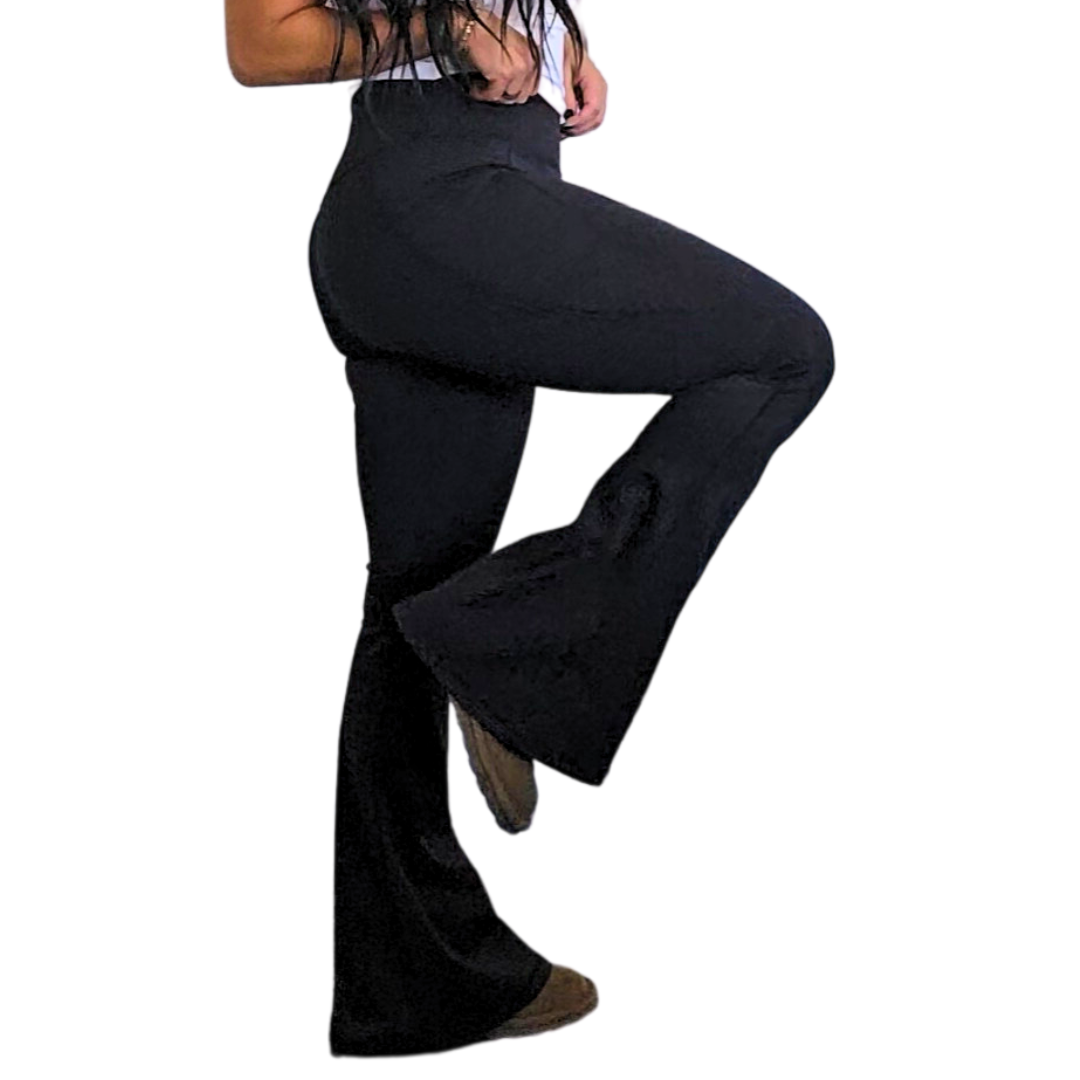
Before we get into specific pieces, remember: your “goal weight” isn’t the only metric that matters.
If you’re training consistently, your body might recomp—more muscle, less fat—while the scale barely changes. That can also mean your clothes fit differently over time.
So choose activewear that supports consistency and confidence now, and that can adapt as you progress.
Leggings & shorts: waistband, inseam, and seam placement
Waistband
- High-rise: usually best for lifting, bracing, and a secure feel
- Mid-rise: comfortable for some, but can roll for others during hinges
- Wide waistbands reduce rolling
- A drawcord is great if you’re between sizes or your waist/hips ratio makes sliding more likely
Inseam
- Short inseams can ride up (and can increase inner-thigh rubbing)
- Longer inseams reduce thigh chafe (especially for walking/running/circuits)
Seams
- Flatlock seams are usually more comfortable
- Avoid thick seams on the inner thigh if you run or walk a lot
Pockets
- Side thigh pockets tend to bounce less than loose waistband pockets
- Back waistband pockets can be great if they’re snug and placed high enough
Sports bras: support level, straps, and how to test fit quickly
Support by activity
- Low: yoga/mobility
- Medium: lifting
- High: running and high-impact classes
Quick fit test
- Band should be snug (this is the anchor)
- Straps adjustable if possible
- No digging under arms
- Bounce test: a few jumps—if it hurts or feels out of control, go up in support (not necessarily size)
Common mistake Sizing up the band for comfort instead of getting the right cup/support. A stable band is what keeps things secure.
Comfort tip If you sweat heavily, prioritize softer seams and smooth edges to reduce irritation.
Tops & layers: coverage, ventilation, and arm mobility
Tops for lifting
- Sleeveless or short sleeve with enough room for shoulders
- Wide armholes help with rows/presses
- Length that stays down during squats (or a hem that doesn’t flip constantly)
For cardio
- Breathable tees/tanks
- Back ventilation is a plus
- Avoid heavy cotton if you’re doing longer sessions
Layers
- Lightweight zip or hoodie for warm-up/cool-down
- Try not to rely on heavy cotton layers that trap sweat
Confidence note Coverage preferences are personal. The “best” top is the one that reduces anxiety and helps you show up consistently.
Choosing activewear based on your real goals (not just aesthetics)
Activewear is a tool. A helpful one, but still a tool.
The goal isn’t “look lean in leggings.” The goal is to support what you’re trying to do:
- more pushups
- longer plank exercise holds
- faster mile time
- heavier dumbbells
- better fitness test results
- consistent weekly workout routines you can stick to
And if you’re trying to stop weighing yourself often (or at least stop letting the scale decide your mood), performance goals are a much better anchor.
If your goal is weight loss: prioritize consistency and comfort
Weight loss comes from habits you can repeat. Uncomfortable clothes become a weird, sneaky excuse to skip:
- “I don’t feel like changing.”
- “Nothing fits right.”
- “I’ll go tomorrow.”
Instead, pick pieces you’ll happily wear for:
- walks
- gym sessions
- errands
- quick home workouts
That increases total movement and makes training feel easier to start.
If you want to track progress without relying on scale weight, use:
- inches (measuring tape)
- photos
- performance improvements
- energy, sleep, mood
Also: activewear won’t replace sustainable nutrition and training. And no clothing (or quick-fix mindset—diet pills included) will beat consistency.
If your goal is body recomposition: choose adaptable fits
Recomp changes how clothes fit.
You might tighten up around the waist but grow glutes/quads. Or your shoulders/back change if you’re lifting consistently. That’s normal.
Look for:
- adjustable bra straps
- flexible compression that doesn’t feel like a corset
- fabrics that recover shape and don’t bag out after a few wears
And keep your motivation tied to non-scale victories: stronger lifts, better endurance, clothes fitting differently, better posture and form.
How to track your fitness progress with Flex it Pink (without letting the scale ruin your mood)
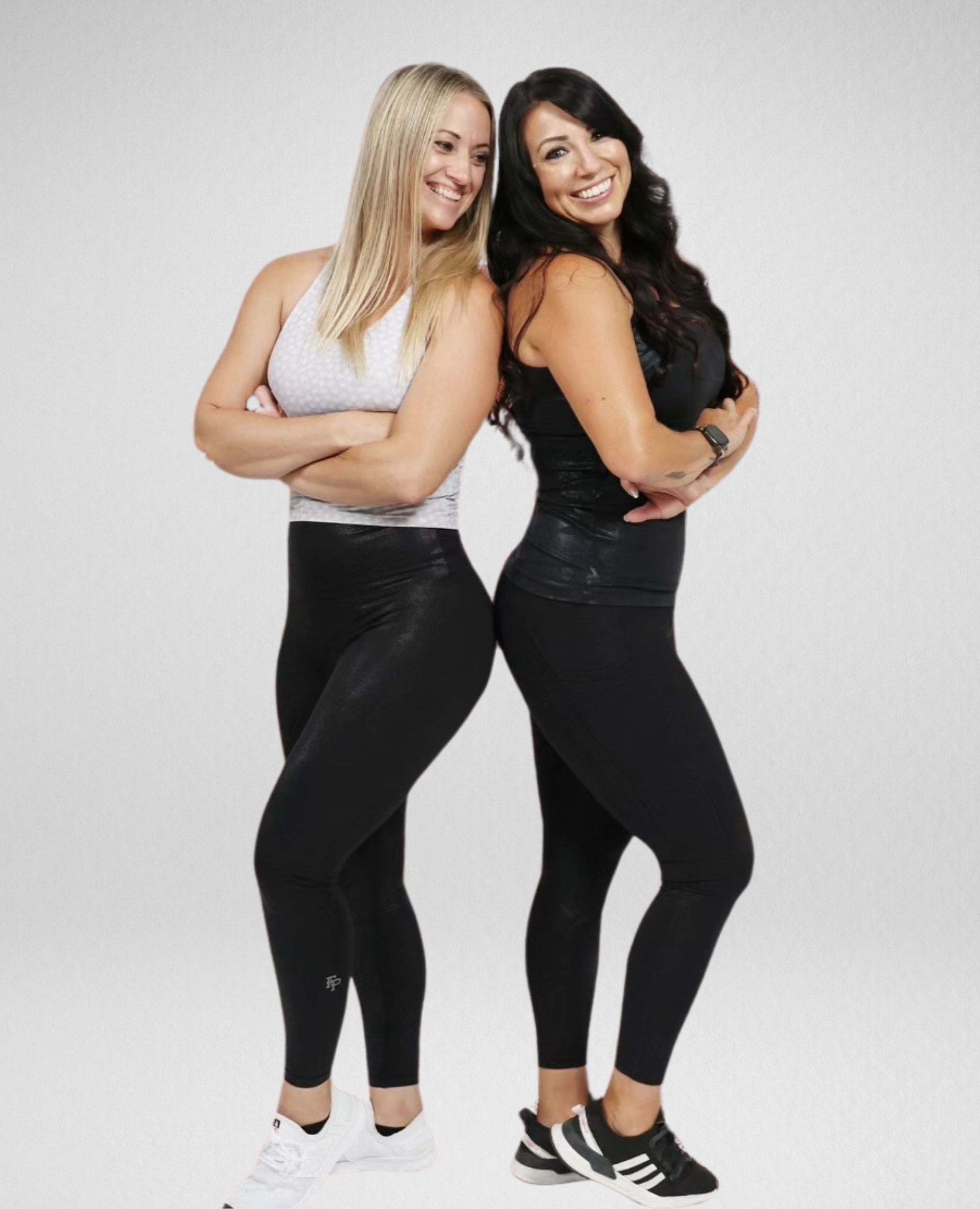
Weighing yourself daily is a common trap.
For a lot of people, it increases anxiety, distorts motivation, and turns a normal fluctuation (water, sodium, hormones, stress) into a “good day” or “bad day.”
Instead, track progress in ways that reflect what your workouts are actually improving.
Good alternatives:
- measuring tape (monthly)
- progress pictures (every 4 weeks)
- strength and endurance benchmarks
- how clothes fit
- recovery, sleep, mood, energy
The key is to keep it simple: choose 2–3 metrics to track weekly or monthly so you don’t burn out on tracking.
Non-scale victories to track (simple list you can stick to)
Performance
- max pushups
- plank exercise hold time
- heavier dumbbells on key lifts
- faster run pace or longer distance
Endurance
- longer steady-state run/walk
- less rest needed in circuits
- quicker recovery after hard sessions
Body measurements (monthly)
- waist
- hips
- thighs
Visual (every 4 weeks)
- progress pictures with consistent lighting, same pose, same time of day if possible
Lifestyle
- energy levels
- sleep quality
- mood and stress
These are the changes that usually show up first—and they’re often more motivating than a number.
A simple monthly fitness test (strength + endurance) with Flex it Pink
Pick a few safe, repeatable mini tests and do them once per month:
- Max pushups (or elevated pushups if needed)
- Plank time (front plank)
- 1-mile run/walk time
- One key lift benchmark (example: goblet squat with dumbbells for a set of 10 with clean form)
Track it in a notes app or planner. Compare month to month.
Don’t chase perfection. Look for the trend.
Flex it Pink review: where it fits if you’re building a practical activewear wardrobe
If you’ve been searching things like “Review Flex it Pink” or you’ve seen the phrase “Strong Looks Good on You!”, here’s where Flex it Pink fits in practically.
The biggest reason people struggle with consistency isn’t a lack of motivation—it’s friction:
- not knowing what to wear
- not knowing what to do at the gym
- not tracking progress in a way that feels rewarding
A good activewear setup helps, but the real “system” looks like this:
clothes + routine + tracking = consistency
Flex it Pink leans into that “system” feel with a community angle (deals, drop updates, fitness challenges) that can make staying consistent easier—especially when motivation dips.
What to look for in a fitness planner (and how the Flex it Pink planner can help)
A planner is worth it if it helps you track what actually drives results.
Planner features that matter:
- workout logging (sets, reps, weights)
- progressive overload tracking (so you can see strength improve)
- body measurements (optional, monthly)
- progress picture reminders
- mood/energy notes (so you notice lifestyle wins too)
That’s also where something like the Flex it Pink fitness planner / flex it pink planner can support the mindset shift: you’re tracking strength and endurance improvements, not just scale weight.
Use case that actually helps:
- plan your weekly workout routines
- match outfits to training days (running day vs lifting day)
- reduce “what do I do today?” stress
How to pair activewear + planning for better consistency (a realistic workflow)
Here’s a simple workflow that’s realistic for most people:
- Plan 3–4 workouts/week (even if two are short).
- Pre-select outfits based on session type:
- running day: high-support bra + anti-chafe bottoms + pocket
- lifting day: squat-proof leggings + stable waistband
- HIIT day: medium compression + secure top hem
- Lay clothes out the night before (reduces decision fatigue).
- Log just a few key numbers:
- pushups or plank time
- one main lift weight
- run/walk time or distance
If you like community motivation, challenges can help when discipline is doing the heavy lifting.
Shopping checklist: how to buy smarter (and avoid regret purchases) with Flex it Pink
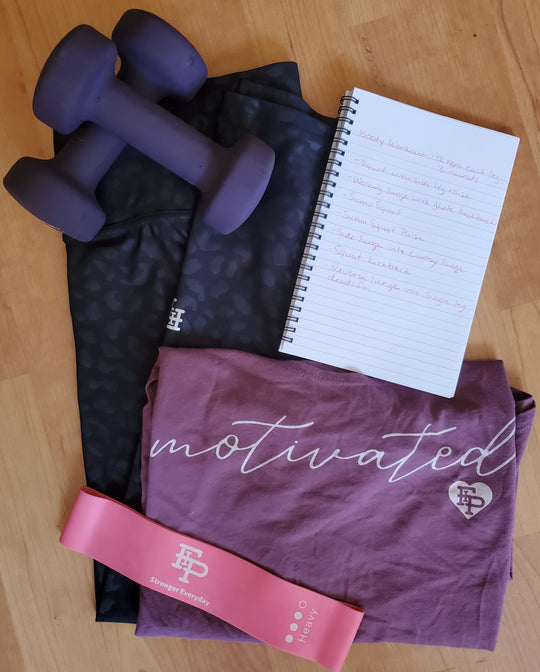
Most regret purchases happen because people try activewear on standing still… and never test it like they train.
Use this step-by-step checklist in-store or at home.
Try-on checklist (do this in the fitting room)
- Squat test: deep squat—check opacity and waistband.
- Lunge test: step into a deep lunge—feel seams and stretch.
- Plank/pushup check: does the waistband slide? does the top fall/ride up?
- Bounce test: for bras—jump a few times.
- Seam rub check: walk around—inner thigh, underarm, underbust.
- Pocket check: put your phone in the pocket—jog in place. Does it bounce?
Sizing strategy that actually works
- Buy for your current body, not the body you’re “working toward.”
- Don’t size down as motivation. It usually backfires (sheerness, rolling, discomfort).
- If you’re between sizes, prioritize movement and opacity over the number.
Suggested starter set (covers most workouts)
If you’re building from scratch, this is enough for a practical rotation:
- 2 bottoms:
- 1 squat-proof pair for lifting
- 1 lighter pair (or shorts) for cardio
- 2 tops (one more breathable for cardio)
- 1–2 sports bras (medium + high support)
- 1 light layer (zip/hoodie) for warm-up/cool-down
Rotate based on how much you sweat and how often you do laundry.
Function first. Then add color if you want it.
Build a small “capsule” activewear wardrobe (covers most workouts)
A capsule wardrobe just means fewer pieces that work harder.
A simple capsule:
- Neutral leggings/shorts you can pair with anything
- Basic tops that don’t restrict movement
- A high-support bra you trust for running
- One layer you can throw on for warm-ups and errands
Add one bold piece if you like color—but build the base around performance.
If you want deals + motivation: join the Flex it Pink community
If you’re already considering Flex it Pink, joining the community is an easy bonus.
You’ll get:
- exclusive deals
- drop updates
- fitness challenges
- 10% off your first order
More importantly, community and challenges can help with consistency—because motivation isn’t always reliable, but a supportive environment can keep you showing up.
Wrap-up: choose activewear that supports the person you’re becoming with Flex it Pink
Here’s the framework to keep:
- Match activewear to workout type (running vs lifting vs HIIT isn’t the same).
- Prioritize fabric + fit (breathability, stretch, compression, seams).
- Buy for movement (squat-proof, secure waistbands, no chafe).
- Track progress beyond the scale (pushups, plank exercise time, mile pace, dumbbells, measurements monthly).
And here’s the shift that makes it stick: focus on performance goals and non-scale victories. They keep motivation stable, even when the scale is noisy.
Action step for this month:
- Upgrade one piece that currently distracts you during workouts (leggings, bra, or top).
- Choose one progress metric to track (plank time, pushups, mile time, or a key lift).
That’s how you build a fitness routine—and a wardrobe—that supports who you’re becoming.
READ MORE: trendyber.com
Recommended for you
 How to Style Christian Streetwear for Men: 5 Outfits That Work
 Thank God Review 2026: Is Christian Streetwear Worth $60?
 Best Christian Streetwear for Men in 2026: Top Faith Brands
 How to Choose Running Shorts: Inseam, Liner & Fabric Guide for Men
 Mier Sports Review 2026: Affordable Running Gear Worth Every Dollar
 Best Men’s Running Shorts 2026: The Complete Buyer’s Guide